
Take a stroll around the District, and you’re bound to see it — a restaurant advertising itself with unordinary-looking “food” generated by AI.
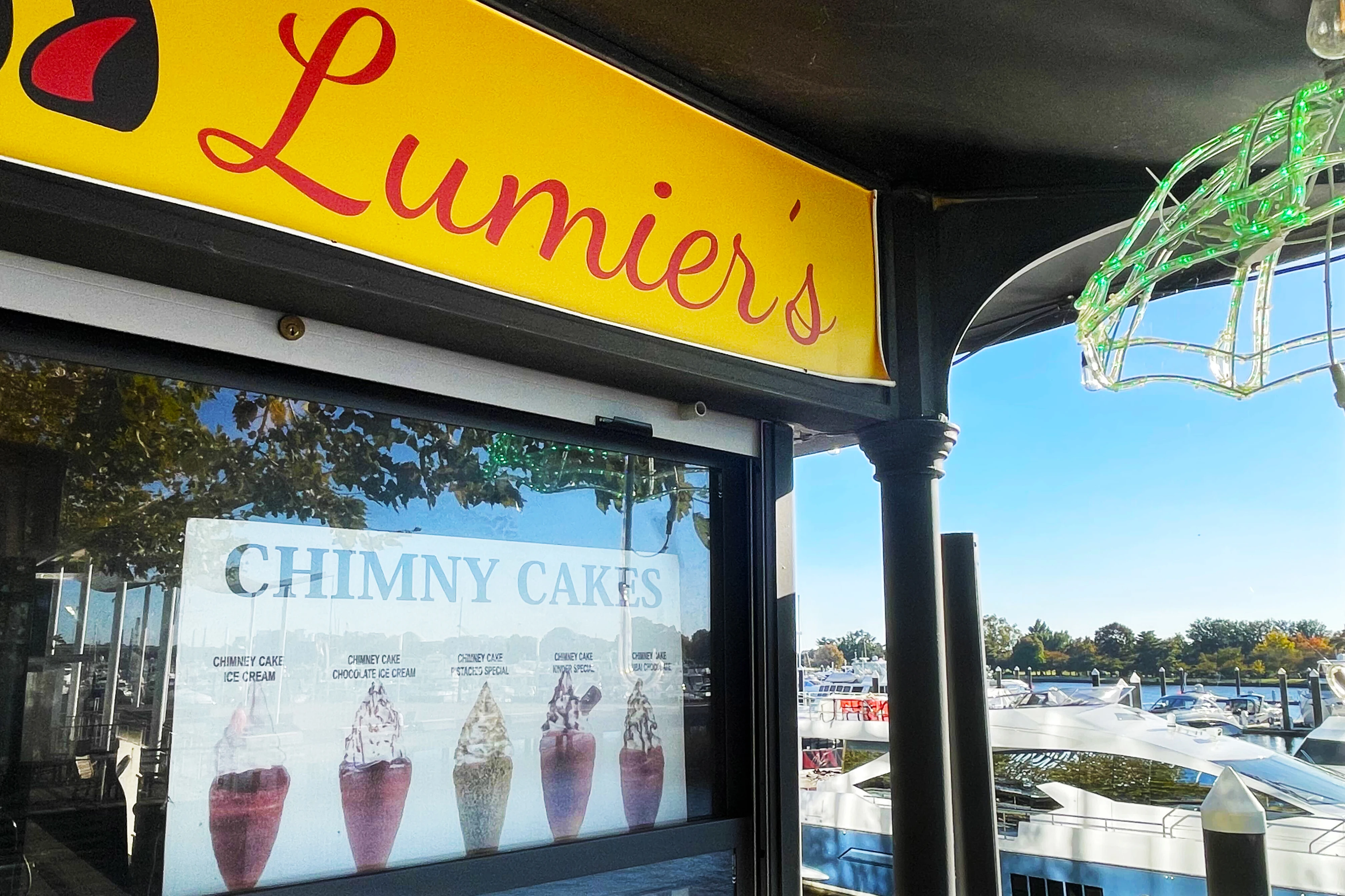
They aren’t hard to miss. Some ads feature chicken tenders with a crispy, wart-covered texture or a chicken parm that looks more like a grinning monster than an authentic Italian sandwich. One poster next to Lumier’s Chimney Cake at The Wharf, which appears to be made with AI, misspells the name of the Hungarian sweet treat as “chimny cakes,” leaving out the e.
The less-than-desirable imagery has alarmed some D.C. residents enough to complain online, and they often bring up the same worry: false advertising. If a food stand displays a fully loaded baked potato with uniform rows of bacon bits atop an unnatural mound of sour cream, what happens when it can’t deliver?
Libby O’Neill, the deputy chair of advertising, marketing and promotions at the law firm Loeb & Loeb, said using AI-generated food images isn’t illegal by default. It becomes a problem only if the image grossly misrepresents the product’s quality or quantity.
Trending


“There’s no simple percentage or visual threshold, but if you’re thinking about it from the legal perspective, regulators and courts would look at the overall impression, whether the difference is a material one given what a reasonable consumer would expect,” she said.
If the D.C. Council were to try to crack down on AI-generated ads, O’Neill said she could imagine the District would do it through a bill to protect jobs — such as food photographers and graphic designers — that AI takes away, instead of banning the practice outright.
Scott Suchman, a D.C.-based food photographer for more than 20 years, said seeing AI “slop” ads around the nation’s capital saddens him. He said it feels good, though, when people push back against the ads to stick up for creative professionals.
Suchman knows advertising and marketing can come with a steep price tag and profit margins have been thin for restaurants and small businesses since the pandemic. But still, he’s seen some “abysmal stuff.”
“The images look like garbage,” he said. “The food looks nothing like that. It boggles my mind that folks look at that and think that it looks good, or looks even close to whatever they sell, whether it’s a cheeseburger or chicken wing, mac and cheese, sushi, whatever it is.”
At-large council member Christina Henderson, who chairs the D.C. Committee on Health, introduced a bill in October to prevent companies from using AI-generated images for real estate listings. She said a bill against AI-generated food images on menus, though, is unlikely.
“I feel like everyone is using ChatGPT for their flyers or advertisements these days,” Henderson said. “I feel like with food, though, it’s a little bit different. In part because food marketing has been artificial for quite some time.”

Henderson said bills that would protect creative professionals like Suchman from losing their jobs to AI should be evaluated on a case-by-case basis. Innovation has long affected the job market, she said, citing telephone switchboard operators as an example of a profession made obsolete by advances in technology.
“There used to be hundreds of people whose whole job was to connect phone calls,” Henderson said. “When innovation occurred, yes, hundreds of people lost their employment. But no one passed any laws to say, ‘No, we have to keep manually connecting phones.’”
Since the District isn’t expected to go after AI food ads and businesses could likely skirt false advertising complaints, the public has been left to use an old-school approach to rebuff the “slop” — shame.
Bread Furst, a bustling bakery in Van Ness that makes baguettes by hand, was a recent target. The bakery surprised some patrons in September when it used an AI-generated image of a Roman sandwich on a banner to advertise, of all things, an art event.
Sign up for The Washington Sun Metro newsletter for essential coverage of the D.C. region.
The bakery’s general manager, Scott Auslander, told The Washington Sun in October that his staff had just played around with ChatGPT to create the design out of curiosity, not expecting it to garner so much backlash from a post on Reddit.
“Most of the feedback came online; we heard from a few people in the store, but most of it came from people online, maybe sad to see a sort of old-school-style business in the community using AI,” Auslander said. “We just thought it would be fun to make a poster for an event.”
Bread Furst apologized for the banner in an Instagram post in which employees held up pieces of paper with messages explaining that they’d focus on using man-made ads moving forward. It was well received, and Auslander said it was their best-performing post across the business’s social media.
They weren’t the only ones to apologize for using AI.
Grubb’s, D.C.'s oldest pharmacy, issued a similar apology on Instagram, with the shop’s head pharmacist, Dr. Michael Kim, holding up pieces of paper after the pharmacy used AI-generated content to promote its new tea lab.
Buffalo & Bergen also responded to criticism for posting an AI-generated Instagram poster of a man with a backward arm holding a bag of bagels for Father’s Day. The owner, Gina Chersevani, told Washingtonian the post and AI image weren’t given much thought, as it was the first Father’s Day since her husband died last year.
“Fortunately, the internet stepped in to remind me that after 14 years of running a small business, employing people, supporting the community, and serving millions of bagels, I should never attempt to learn anything new,” Chersevani posted on social media following the online backlash.
Those who defend the use of AI-generated ads are quick to say it’s not OK to bully small businesses trying to get by since using AI can save people time and money. Auslander of Bread Furst said saving money wasn’t what motivated them.
“I don’t know if we even factored in the money, and I can see how some people would say, it’s cheaper, it’s easier, it’s quicker,” Auslander said. “Frankly, I think we spent more time on it, because we were sort of just people learning.”
Author
